


Vest Markets says your account runs on real capital. Its own contract says something very different. So what is the real story, is Vest Markets real capital or not? Traders started asking this week, and Vest has gone inconveniently quiet.
In this article
- Simulated capital vs real capital: what's the difference?
- What Vest says "real capital" means
- The receipts: problems in Vest's own records
- The receipts: claims that don't match the contract
- Has Vest responded?
- Vest's FirmTiers rating
- FAQ
Simulated capital vs real capital: what's the difference?
Simulated capital means your trades run on a demo-style account and never touch a real market. Real capital means actual money is placed in the market when you click buy or sell. Most prop firms (companies that sell trading challenges and pay traders who pass) use simulated accounts, and that is normal as long as they say so.
| Simulated capital | Real capital | |
|---|---|---|
| Are your trades placed in a real market? | No | Yes |
| Where do your payouts come from? | The firm's own funds | Trading profits on real money |
| Who decides if you get paid? | The firm, under its terms | The market result, then the firm's terms |
| Common at prop firms? | Yes, at most of them | Rare |
The difference matters because "real capital" sounds safer and more serious. It suggests your profits are real market profits, not a promise the firm can review before it pays. If a firm sells you real capital, the contract should say real capital too.
What does Vest say "real capital" means?
Vest's docs are very sure of themselves. The Vest Capital overview promises:
"Real Vest capital. Not simulated, actual platform capital backing your positions."
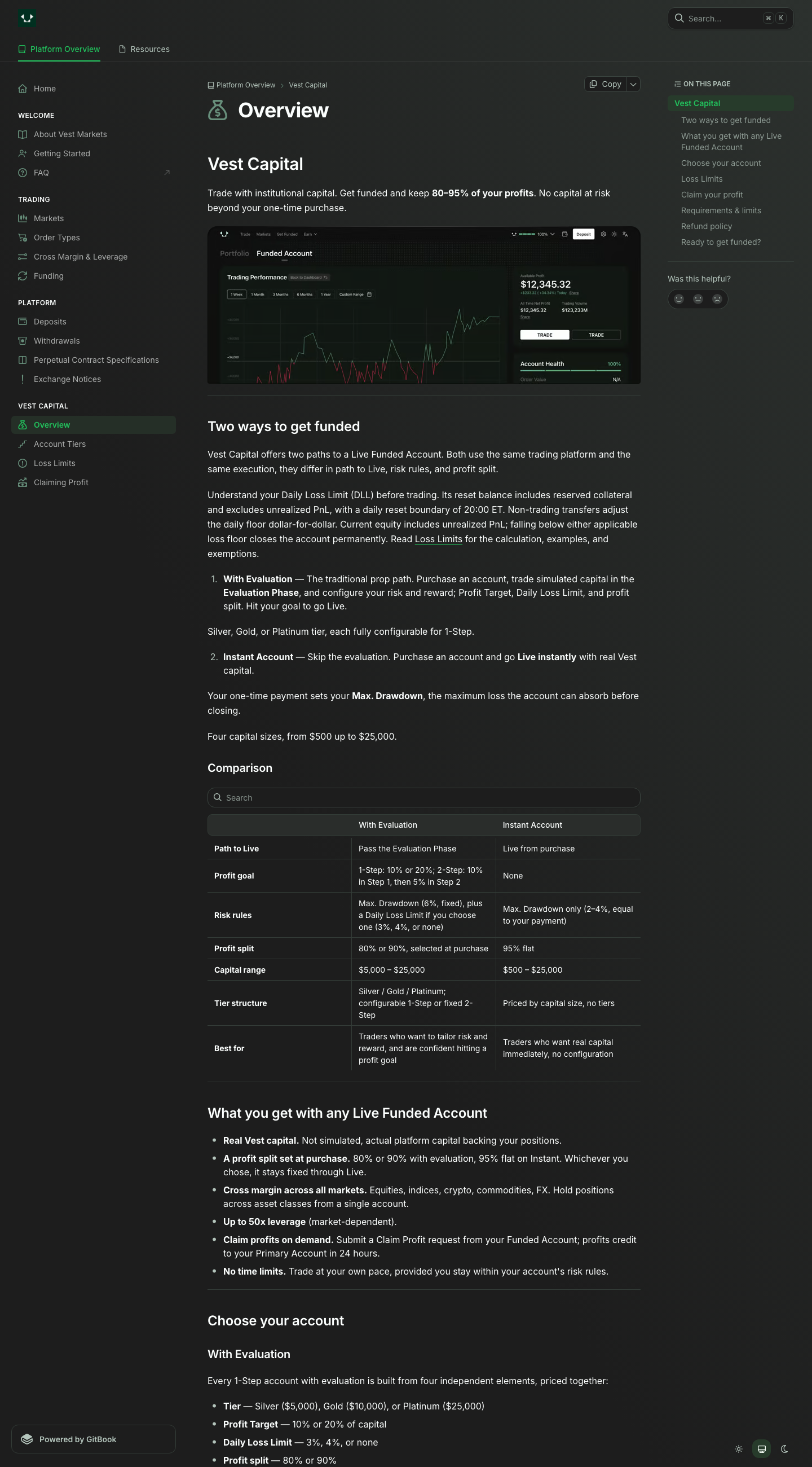
The same page says Instant Accounts "go Live instantly with real Vest capital" and offer a 95% profit split. Note the words "not simulated". That is not vague marketing fluff that could mean anything. It is a direct answer to the exact question traders ask.
Now read the contract. Vest's prop terms of service say:
"All Accounts, including Instant Funded Accounts, are simulated. No real trading capital…"
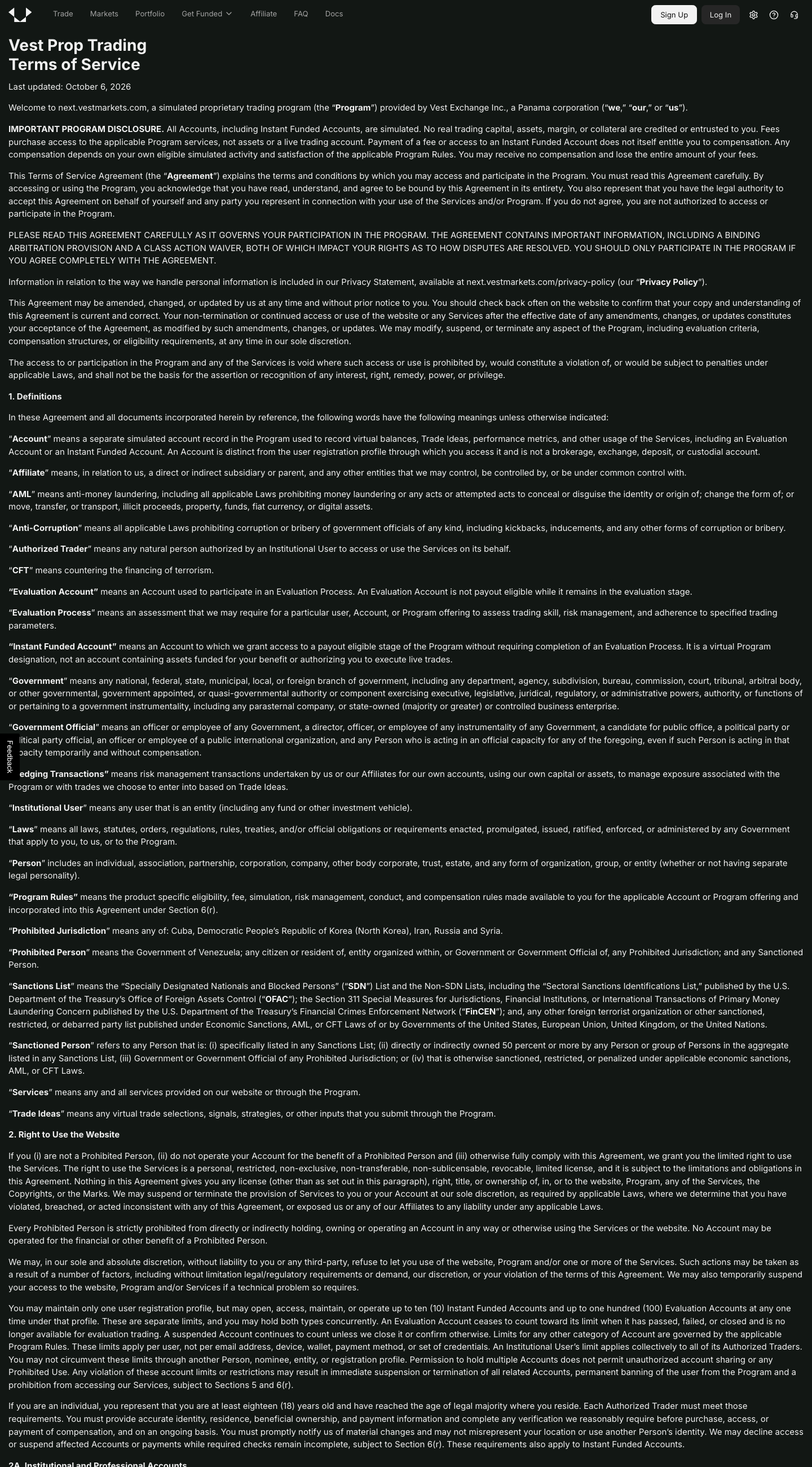
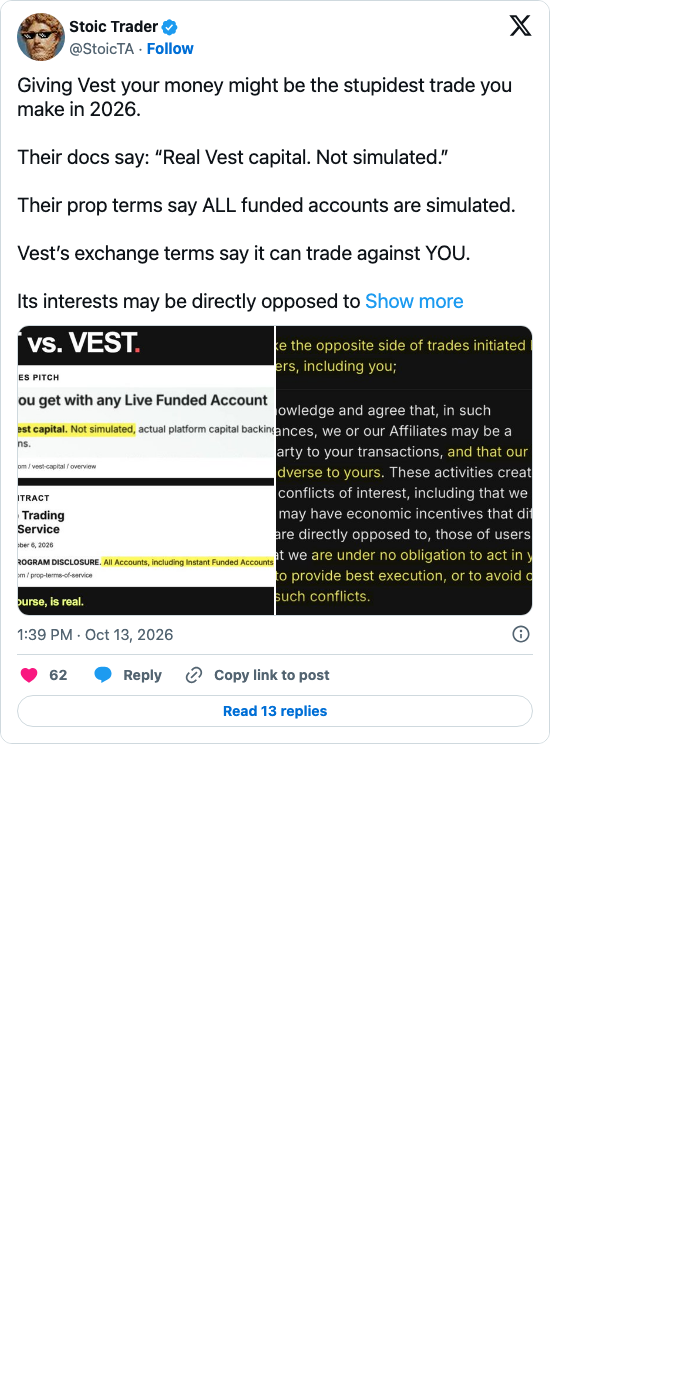
So which one is it? The docs say "not simulated" and the terms say "simulated", about the exact same accounts. Both statements cannot be true at the same time.
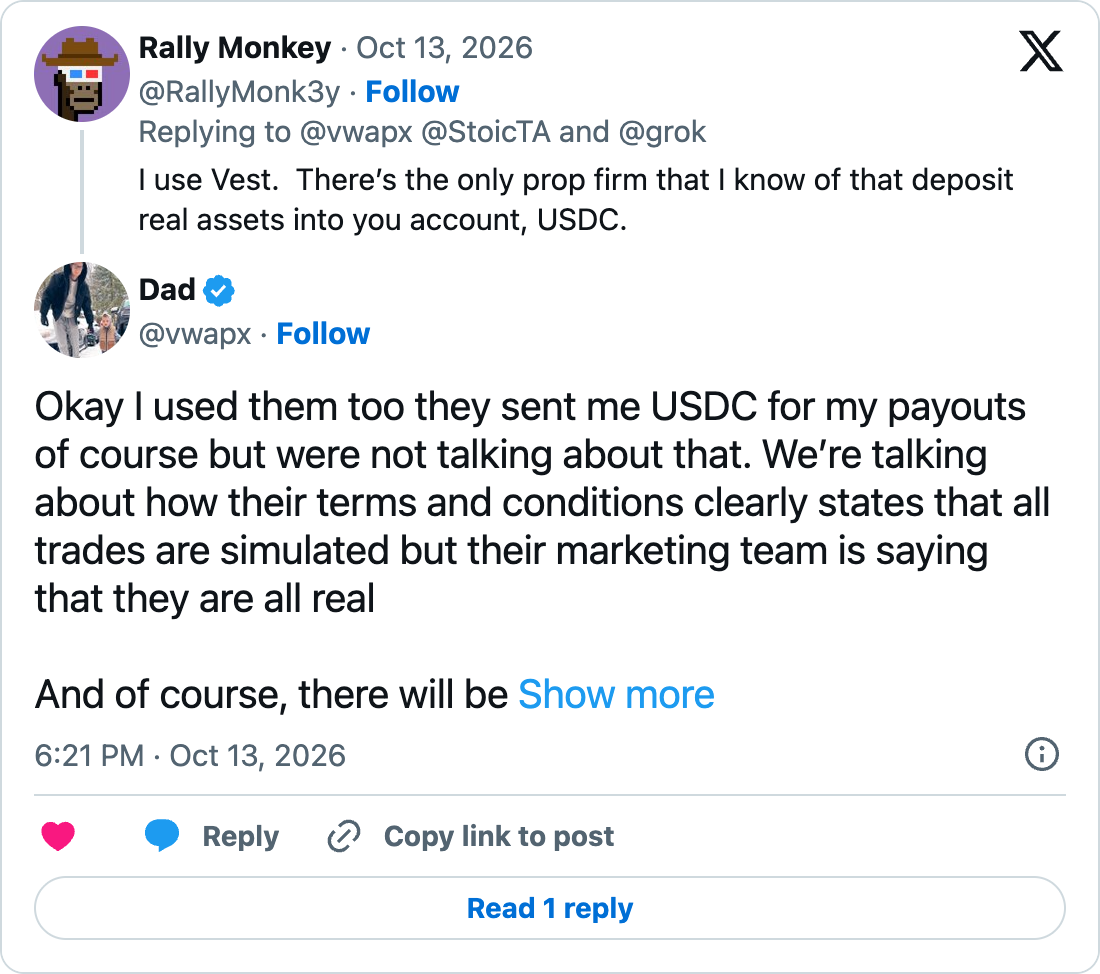
Evidence: @StoicTA was the first to put the two pages side by side. Another trader, @vwapx, backed him up a few hours later.
The receipts: problems in Vest's own records
The "real capital" wording is the headline, but it is not the only issue. Two more come straight from Vest's own documents.
1. Vest's exchange terms let it trade against you
Section 6C of Vest's exchange terms of service says Vest may "take the opposite side of trades initiated by users, including you". The same section says Vest has no duty of best execution, which means no promise to get you the best available price. In plain English, the platform can be the other side of your trade and is not obliged to fill you at the best price.
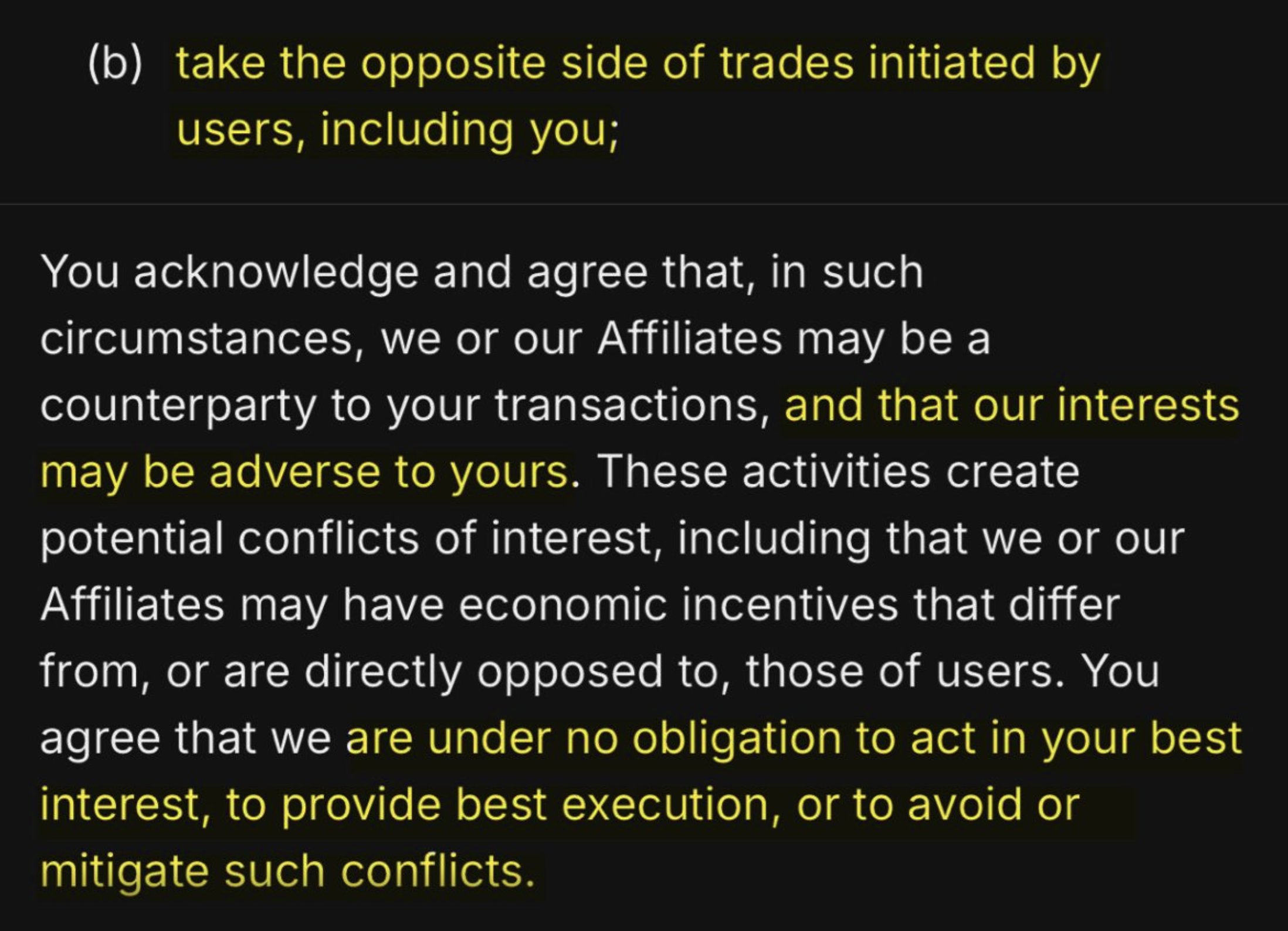
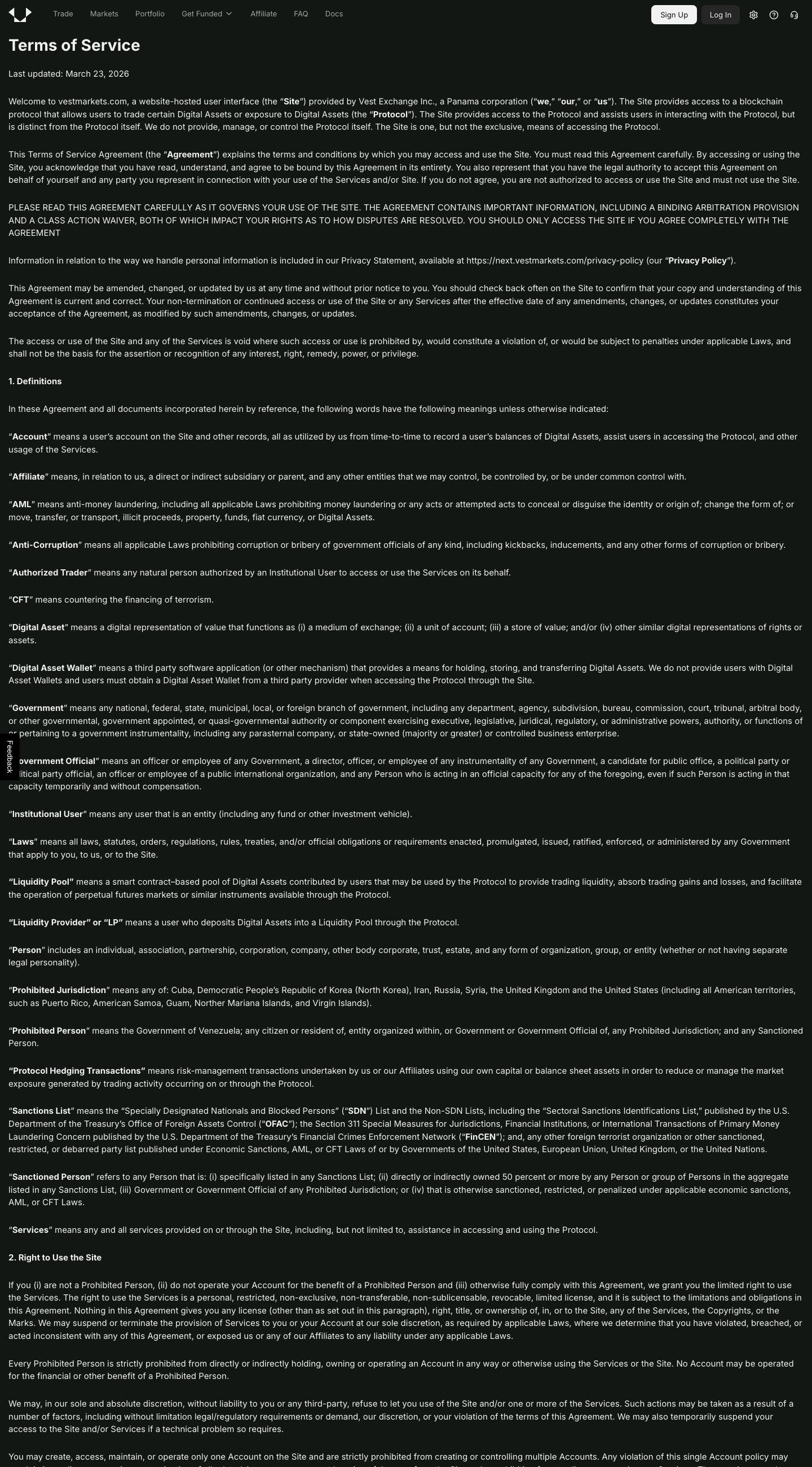
There is a twist. The copy of the same terms on Vest's docs site has no Section 6C at all. Why do two versions of one contract exist, and why is the clause missing from the one most traders will read?
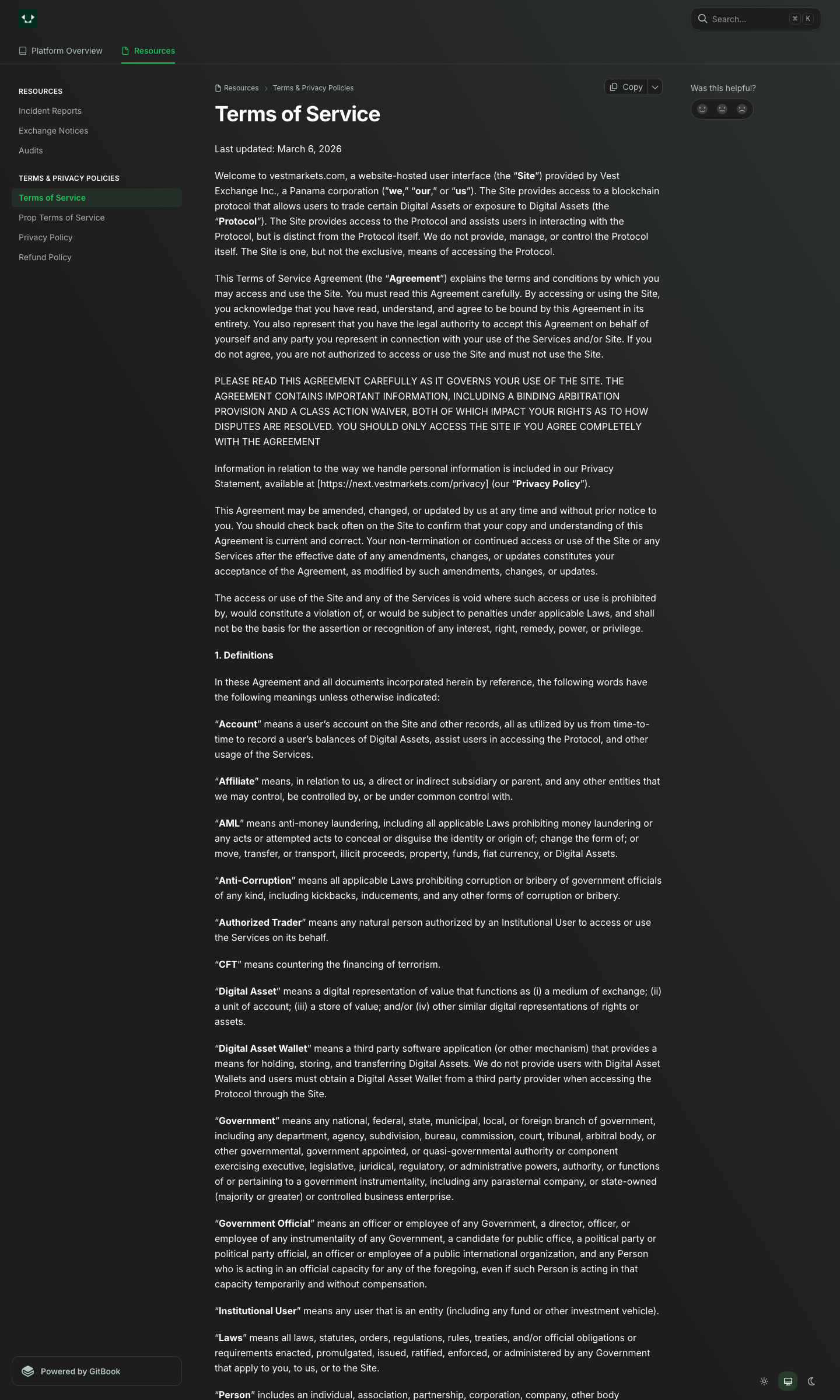
To be fair: these are the terms for Vest's exchange, not its prop program. They tell you how the company is willing to operate, but they are not the prop contract.
2. Multiple pricing failures in 77 days
Vest's own incident reports list three pricing failures between 15 April and 30 June 2026. That is one every 26 days on average:
- 15 April: about 90 orders were force-closed and the whole platform was rolled back.
- 8 June: pricing failure.
- 30 June: pricing failure.
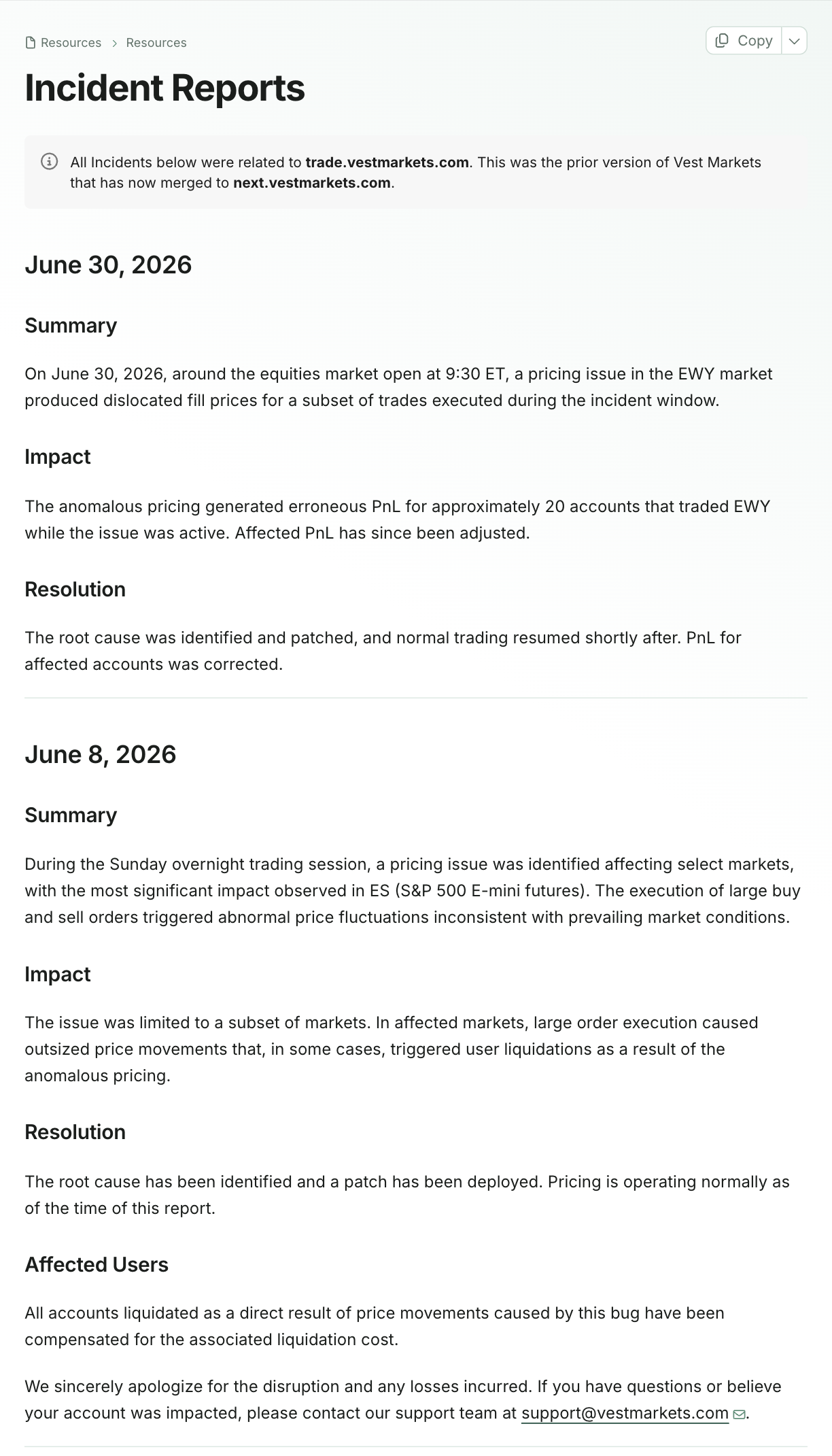
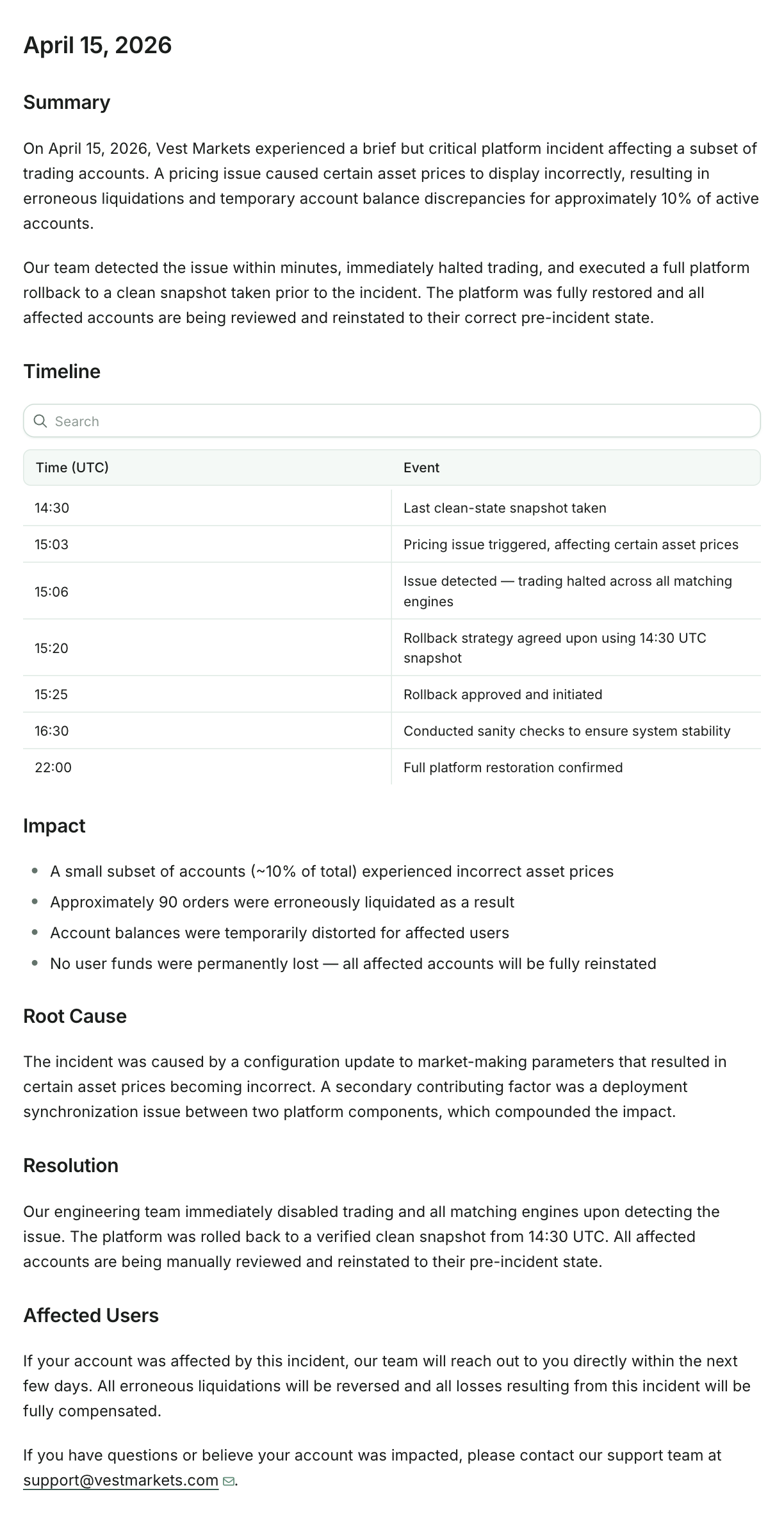
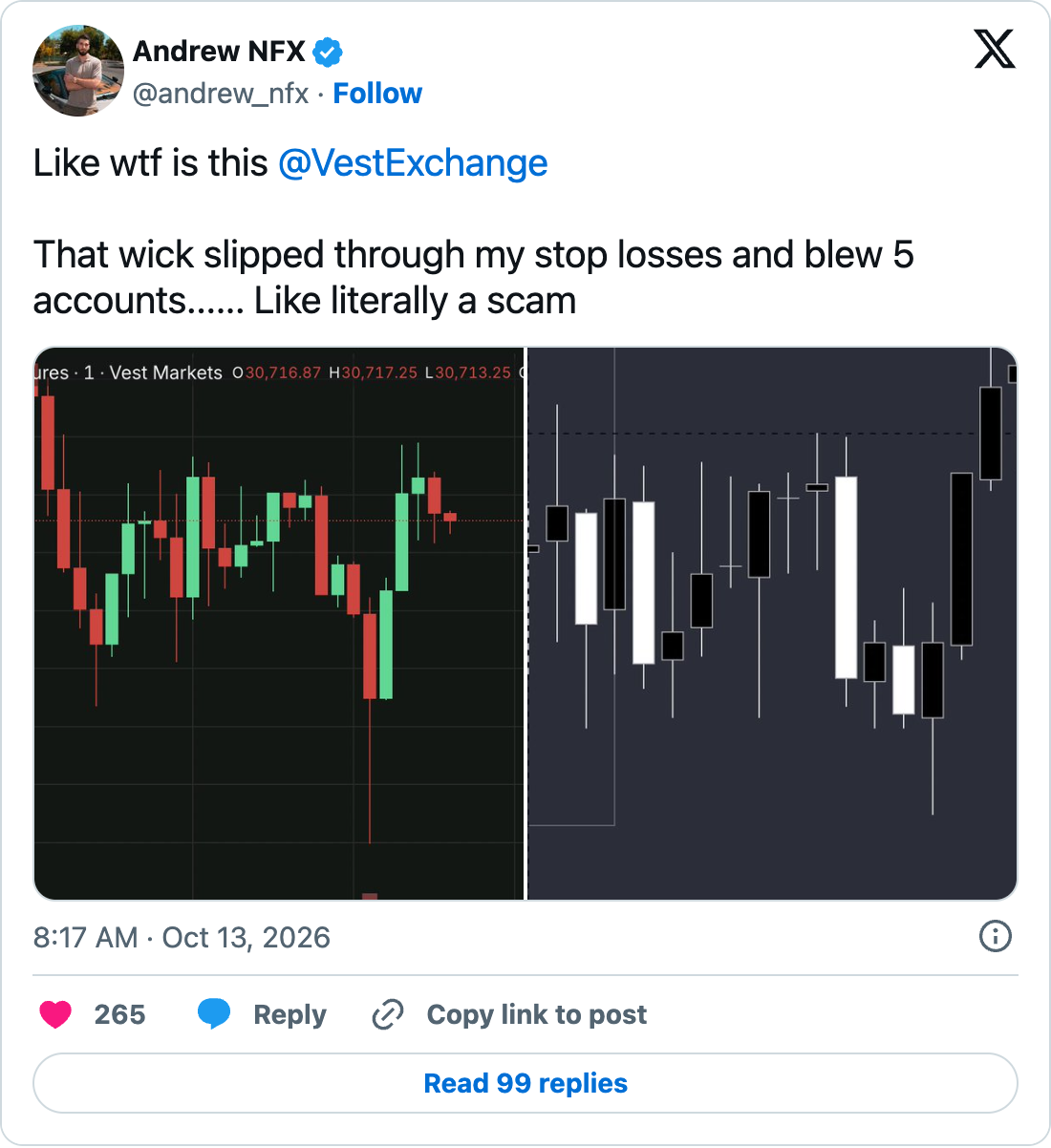
A rollback means trades that already happened were undone. If you were in profit at that moment, that profit could disappear. Trader @andrew_nfx says a bad price wick "blew 5 accounts".
The receipts: claims that don't match the contract
This is where the story stops being about wording and starts being about timing. Two claims around Vest do not line up with what Vest's own terms say.
3. The "simulated" disclosure appeared the day before a $13M raise
On 3 October 2026, Vest's prop terms described the product as "a proprietary trading program". An archived copy from that day contains no statement that accounts are simulated.
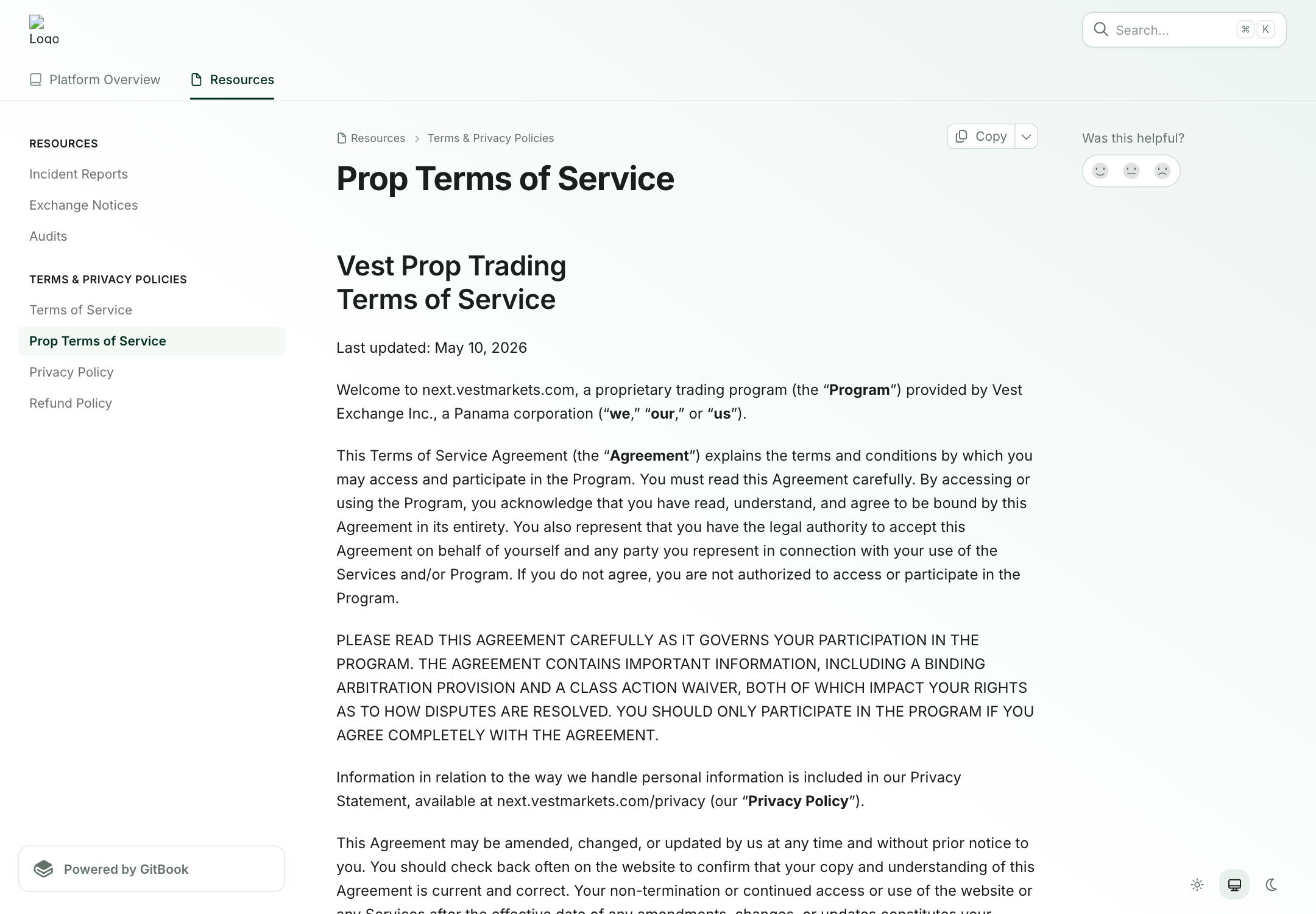
The live version with the "simulated" disclosure is dated 6 October. One day later, on 7 October, Fortune reported that Vest had raised $13 million.
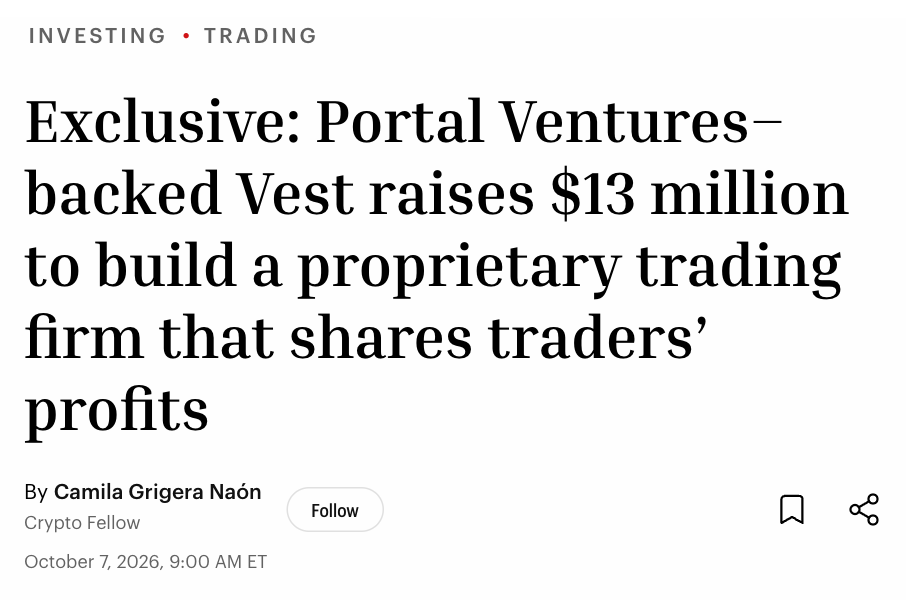
| Date (2026) | What happened |
|---|---|
| 3 October | Archived prop terms: "a proprietary trading program", no simulated disclosure |
| 6 October | Live prop terms dated: all accounts are simulated |
| 7 October | Fortune reports Vest's $13M raise |
| 13 October | @StoicTA posts the contradiction |
We can't tell you why the wording changed when it did. We can ask the obvious questions, though. What did traders who bought accounts before 6 October think they were buying? And was the "real capital" page ever updated to match?
4. Promoters sell "No KYC", but the terms say otherwise
KYC ("know your customer") means proving your identity, usually with an ID and proof of address. At least four accounts on X have promoted Vest as "No KYC", and every one of them posted their own Vest referral link:
- @mygreenknight, 24 September, whose bio reads "Part-Time Cavalryman at @VestExchange"
- @Ev_Trades, 27 September
- @smcabresh, 30 September
- @louisdives, 14 October
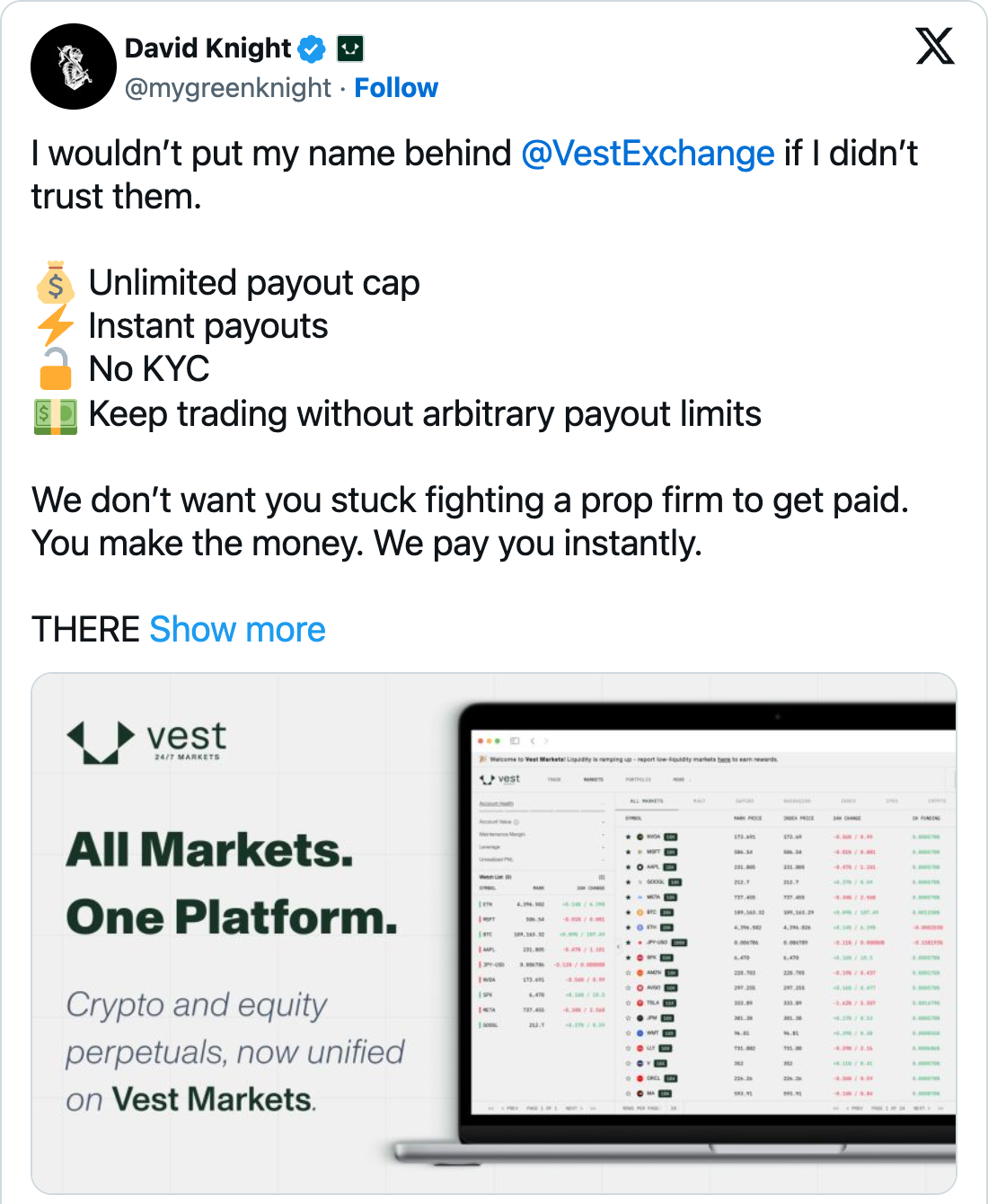
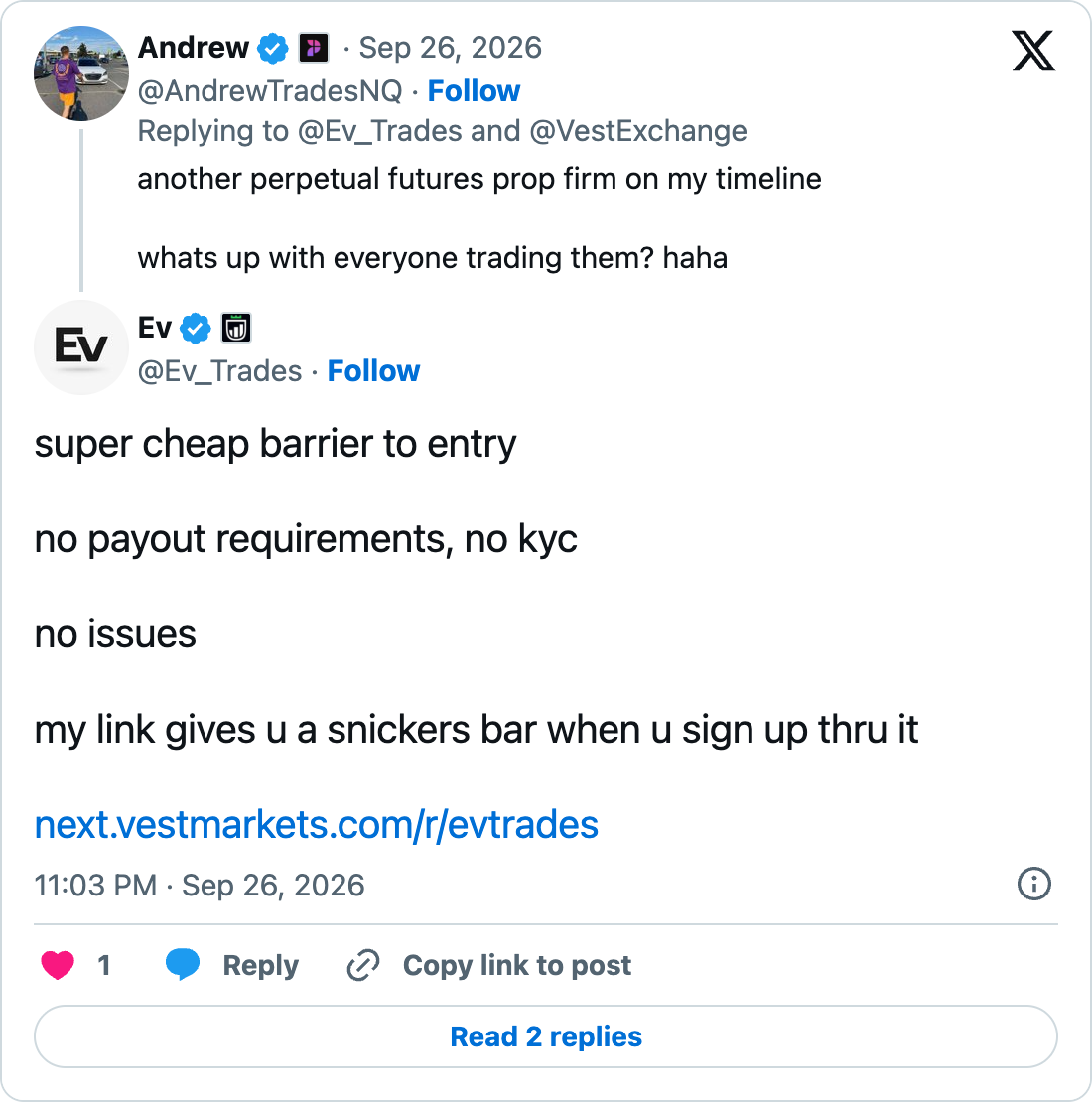
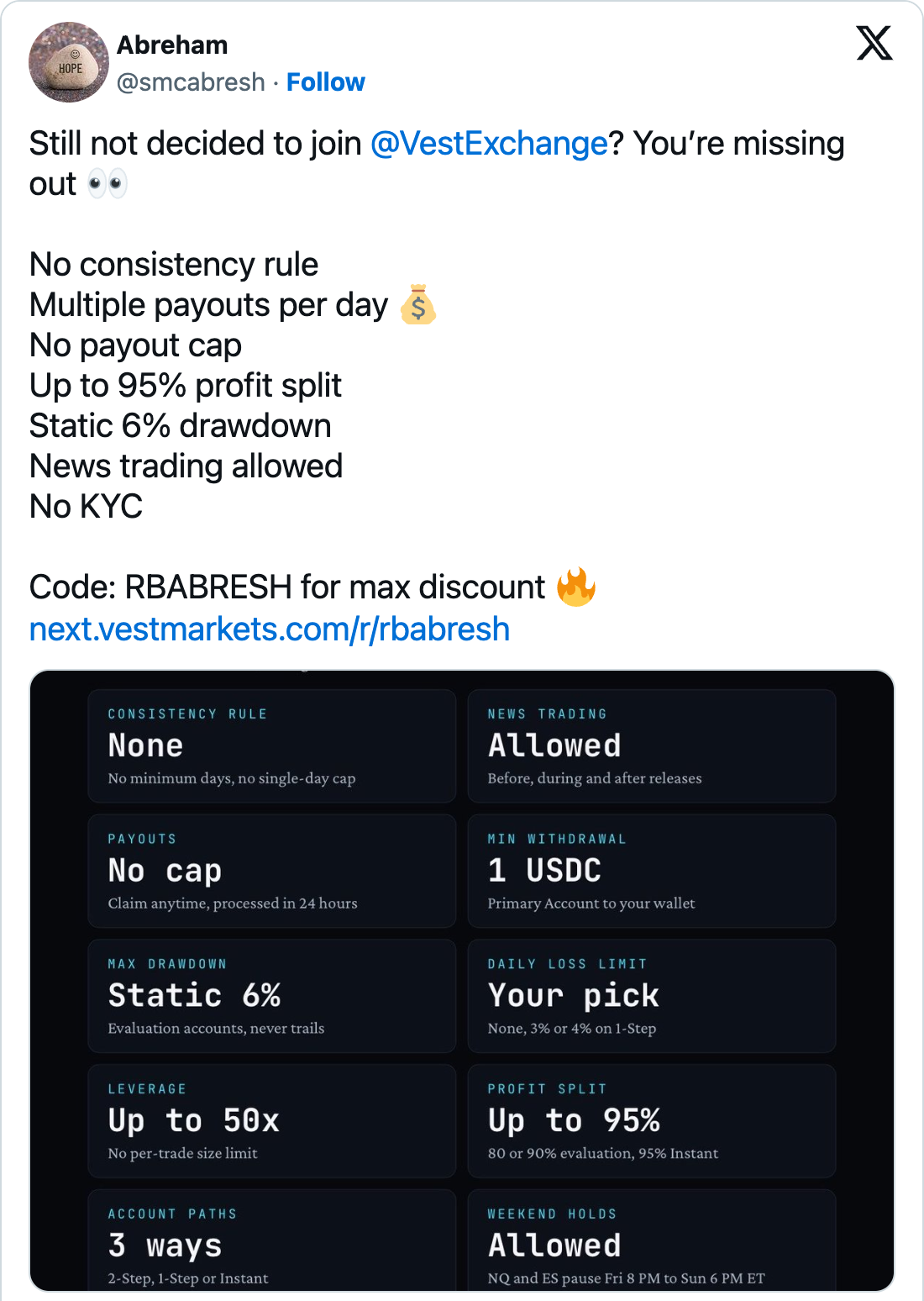
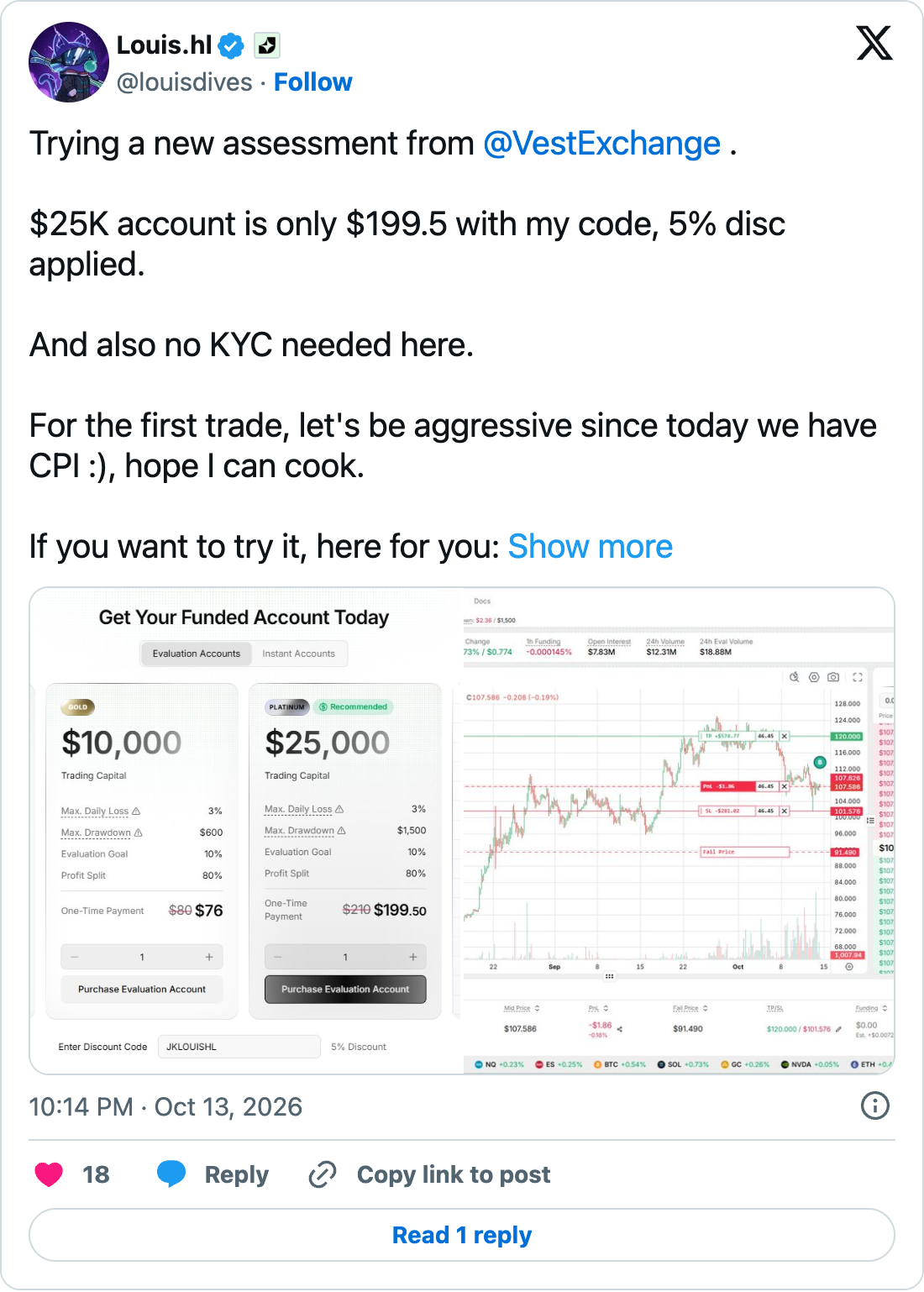
The terms tell a different story. They require "any verification we reasonably require before… payment of compensation". The footer of the Instant account page also says identity checks are not waived.

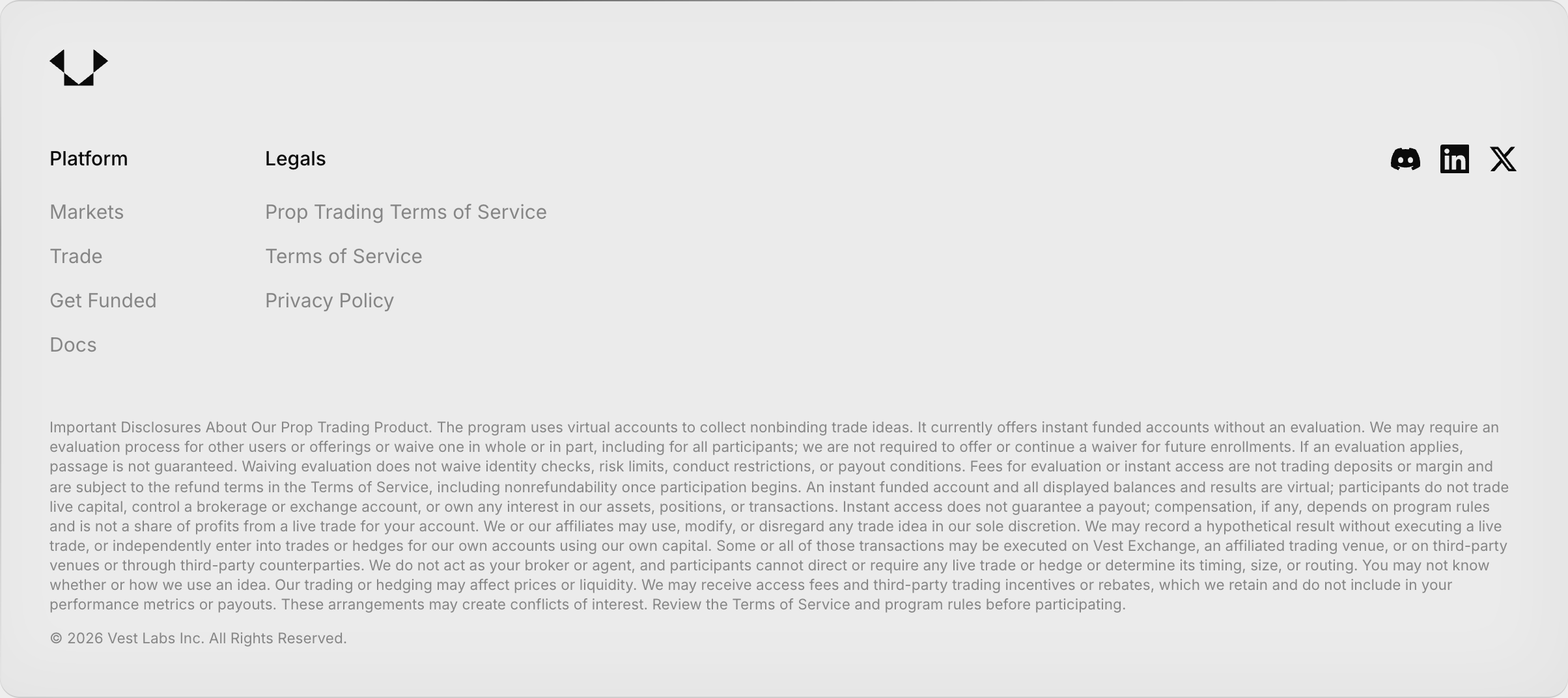
So you may not need ID to buy the account. You likely need it to get paid, you know, when it actually matters. If a firm can ask for verification only after you are in profit, "No KYC" is a false sales line, not a guarantee.
Has Vest responded?
No. As of 16 October 2026, neither @VestExchange nor Vest's founder has replied to @StoicTA's post from 13 October. That is three days of silence on a question that only needs a one-line answer. Wow.
If the accounts really are backed by real capital, Vest could clear this up fast. It could fix the terms, fix the docs page, or explain why both versions exist. Saying nothing while promoters keep posting referral links is definitely a choice.
We will update this post if Vest responds. If you are from Vest and want to set the record straight, our inbox is open.
Vest's FirmTiers rating: D, "Avoid for now"
Vest Markets sits in Tier D on our Perps board with a score of 9 out of 100. D is our lowest tier, and its label is "Avoid for now".
| Vest Markets | |
|---|---|
| Tier | D (Avoid for now) |
| Score | 9 / 100 |
| Board | Perps |
| Scored on | Payout behaviour, rule stability, dispute volume, review integrity |
| Rescored | Nightly at 03:00 UTC |
The score is a read on how risky a firm looks right now, not a verdict for life. Every firm is rescored every night, so Vest can climb if it fixes the contradictions and answers traders. Until then, see how it compares with other perps firms on the Perps board before you spend a dollar.
FAQ
Is Vest Markets real capital or simulated?
Vest Markets' prop terms of service say all accounts, including Instant Funded Accounts, are simulated, with no real trading capital. Its Vest Capital docs page says the opposite, calling it "real Vest capital" and "not simulated". The terms are the contract traders agree to, so they decide what you are buying. Trader @StoicTA flagged the contradiction on 13 October 2026, and Vest had not replied as of 16 October 2026.
Is Vest Markets legit?
FirmTiers rates Vest Markets in Tier D, "Avoid for now", with a score of 9 out of 100 on its Perps board. The rating reflects payout behaviour, rule stability, dispute volume and review integrity. Traders have flagged a mismatch between Vest's "real capital" marketing and its simulated-account terms, and Vest's own log shows three pricing failures between April and June 2026. Read the terms in full before buying any account.
Does Vest Markets require KYC?
Vest Markets has been promoted on X as "No KYC", mostly by accounts posting their own Vest referral links. However, its prop terms say Vest can require "any verification we reasonably require" before paying out compensation. The footer of the Instant account page also says identity checks are not waived. In practice, you may be able to buy an account without ID but still be asked to verify before a payout.
Can Vest trade against its users?
Section 6C of Vest's exchange terms of service says Vest may "take the opposite side of trades initiated by users" and has no duty of best execution. That clause applies to the Vest exchange, not the Vest prop program. The copy of the same exchange terms on Vest's docs site does not include Section 6C, so the two published versions differ. Traders using the exchange should read the version on next.vestmarkets.com.
What went wrong with Vest's pricing?
Vest's own incident reports list three pricing failures on 15 April, 8 June and 30 June 2026, which is three in 77 days. The April incident force-closed about 90 orders and rolled the whole platform back, which undid trades that had already happened. All three incidents happened on Vest's older platform. One trader, @andrew_nfx, says a single price wick "blew 5 accounts".
This article is for information only and is not financial advice. Trading with leverage carries a high risk of loss.
See where every firm sits today
The full S–D board, re-scored nightly at 03:00 UTC.
Links to firms in this article are affiliate links: FirmTiers earns a commission at no cost to you. Affiliate relationships never affect Drama or Pulse coverage, and a boost can't move a firm more than one tier.